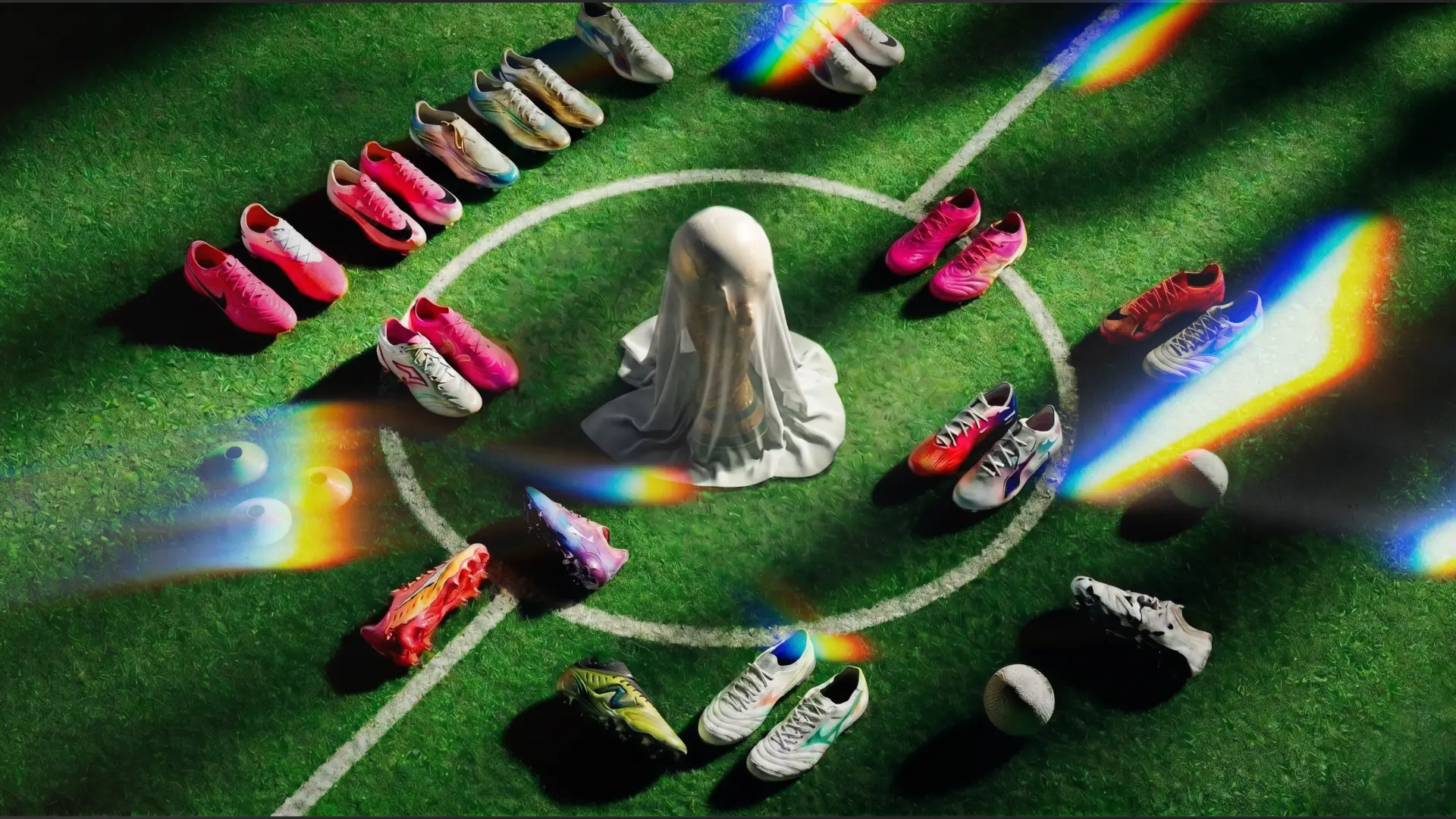

A World Cup is the biggest stage in football, and for boot brands it is the one fixture they cannot afford to get wrong. Six weeks of close-range broadcast, replays, and highlights, all built around the players carrying their logo.
This is who those players are at the FIFA World Cup 2026. With hundreds of footballers spread across 48 squads, we have focused on the tournament's most high-profile names.
Two Different Commercial Structures, One Pitch
Kit deals and boot deals operate under entirely separate commercial frameworks, and the distinction shapes the entire brand picture at a World Cup.
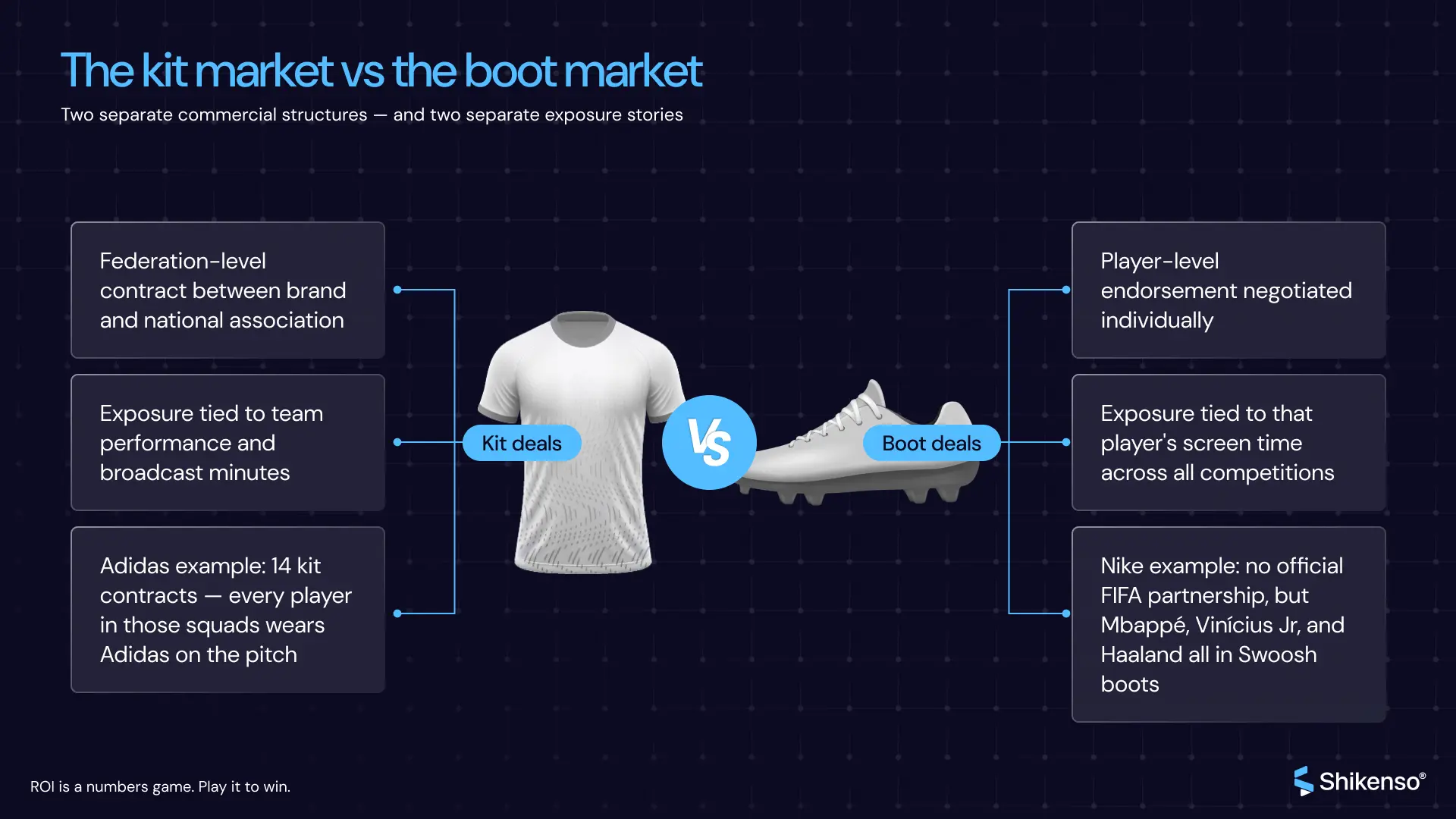
The two systems are independent. A player can wear a Nike kit and Adidas boots. A Puma athlete can represent a Nike-kitted nation. The boot deal follows the player, not the federation.
The Boot Brand Breakdown
There are six brands hold meaningful boot presence at this year’s World Cup:
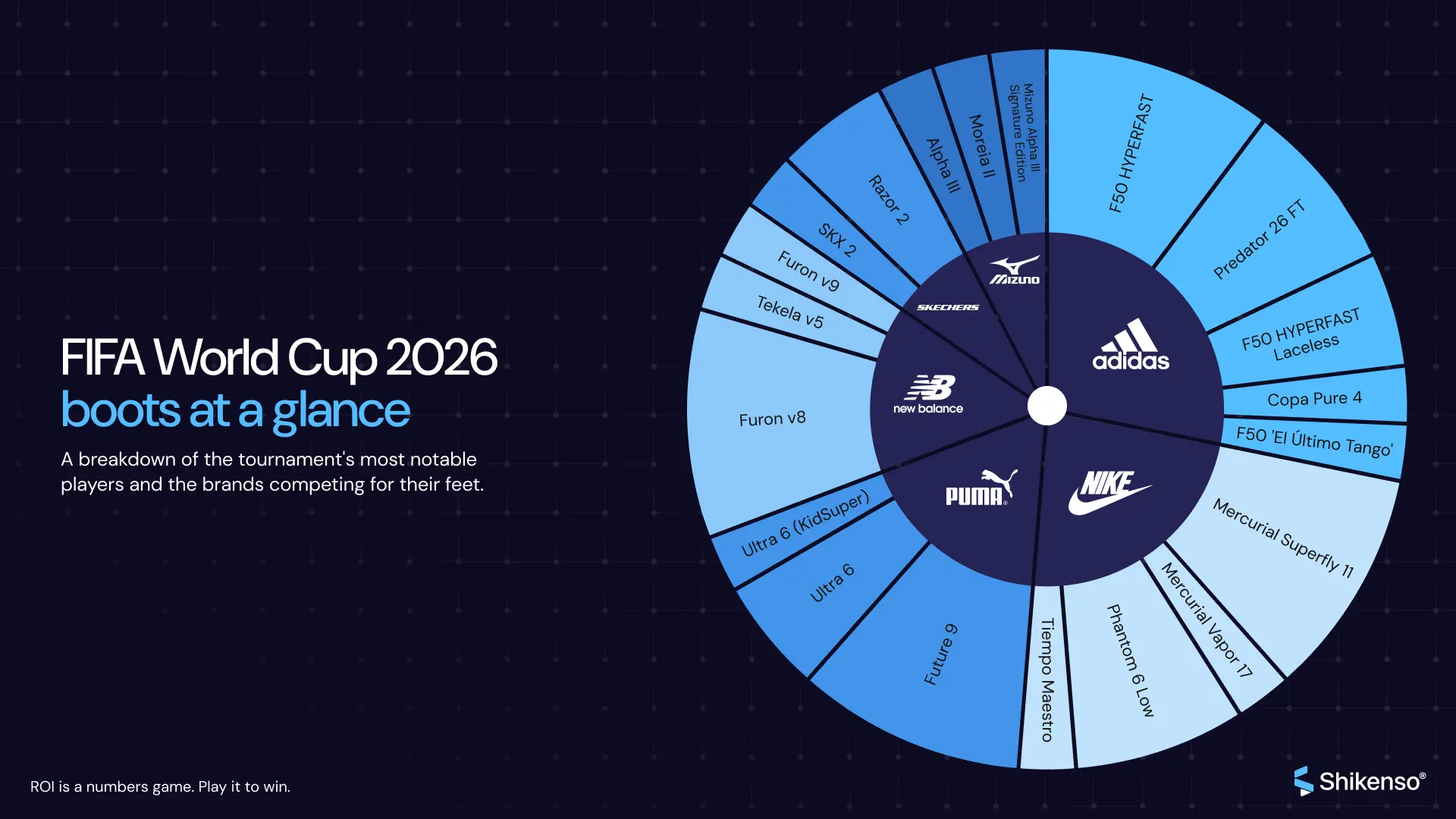
Here is the full featured roster in one place, grouped by brand:
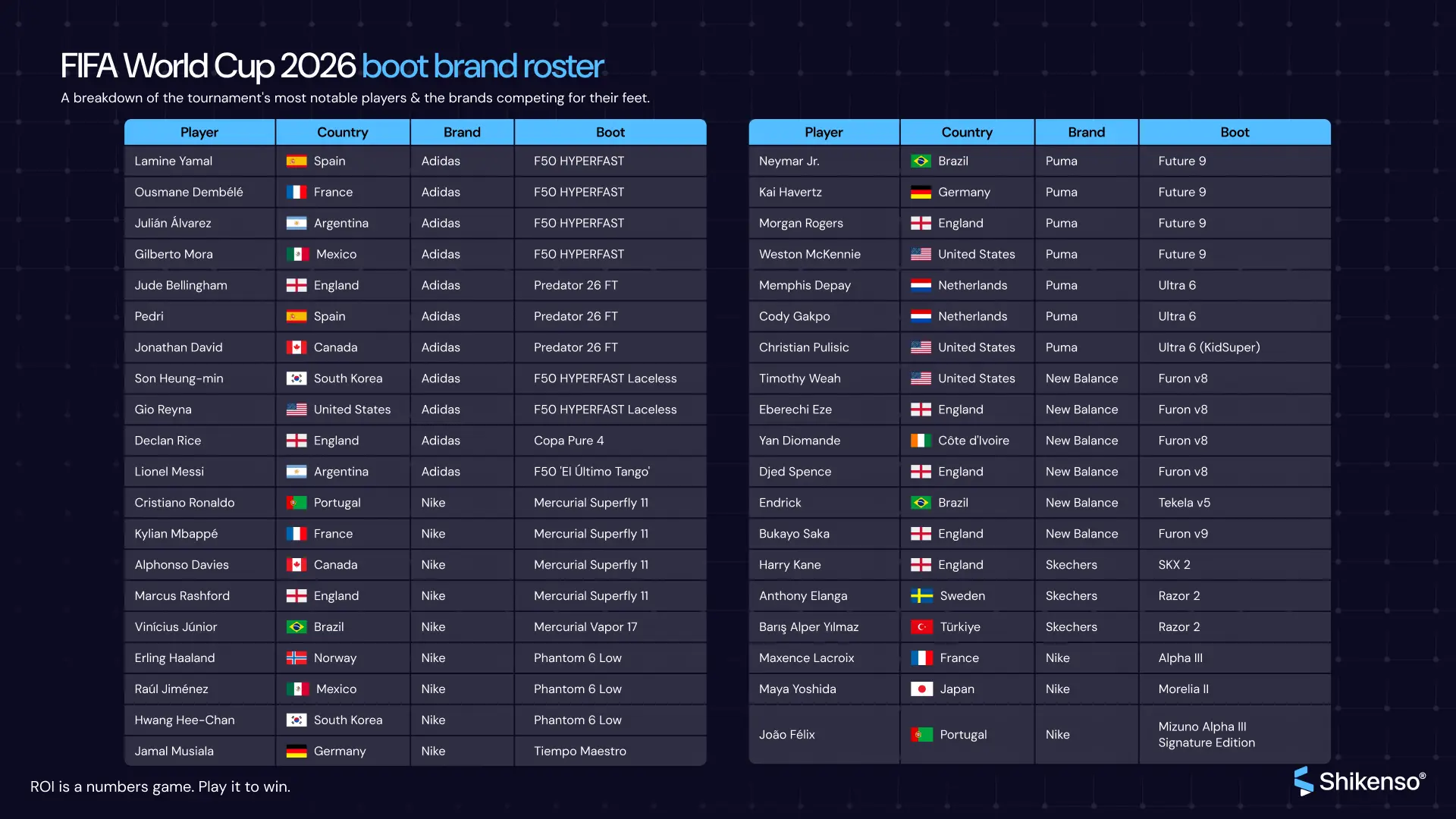
Nike: Speed, Precision, and the Strongest Roster
Nike arrives at 2026 without an official FIFA partnership. Its entire tournament presence runs through player-level deals, and the players it has signed are among the most broadcast-intensive at the competition.
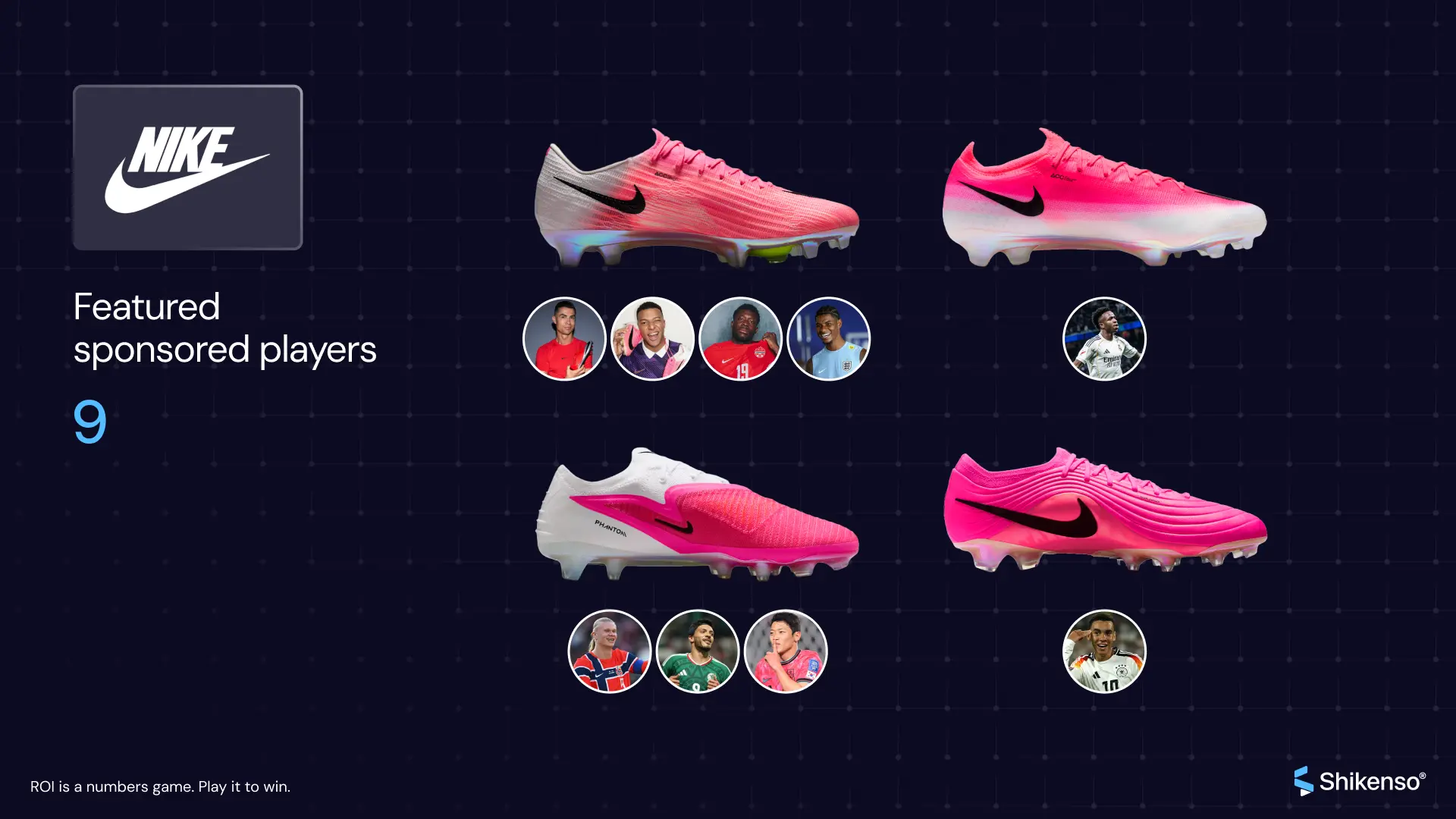
The Mercurial Franchise
Kylian Mbappé wears the Superfly 11 from the Breakout pack, built for explosive acceleration. Vinícius Jr wears the Vapor 17, tuned for a near-barefoot feel at full sprint. Both will generate heavy close-range camera time across France and Brazil's expected deep runs.
Cristiano Ronaldo completes the Mercurial trio in a bespoke Vapor 16 with CR7 branding, appearing in what is likely his sixth and final World Cup.
Phantom and Tiempo: Precision and Control
Erling Haaland wears the Phantom 6 "Force9" signature edition, engineered for high-traction finishing rather than creative dribbling. Virgil van Dijk rounds out Nike's squad in the Tiempo, a heritage boot built for controlled distribution and aerial presence.
Nike's Breakout pack uses a bold pink and red colourway across all three franchises. The design is built to register clearly in the foot-level broadcast shots and replay close-ups where boot logos accumulate the most impression volume.
Adidas: Official Partner, Unofficial Boot War
Adidas holds a position at 2026 no other brand can match:
- Official FIFA global sportswear partner
- Official match ball supplier
- Kit provider for 14 of the 48 teams
- The only brand permitted to carry the official FIFA tournament emblem on player boots
That structural weight defines the commercial floor. The boot battle is fought separately.
A Story of Two Generations
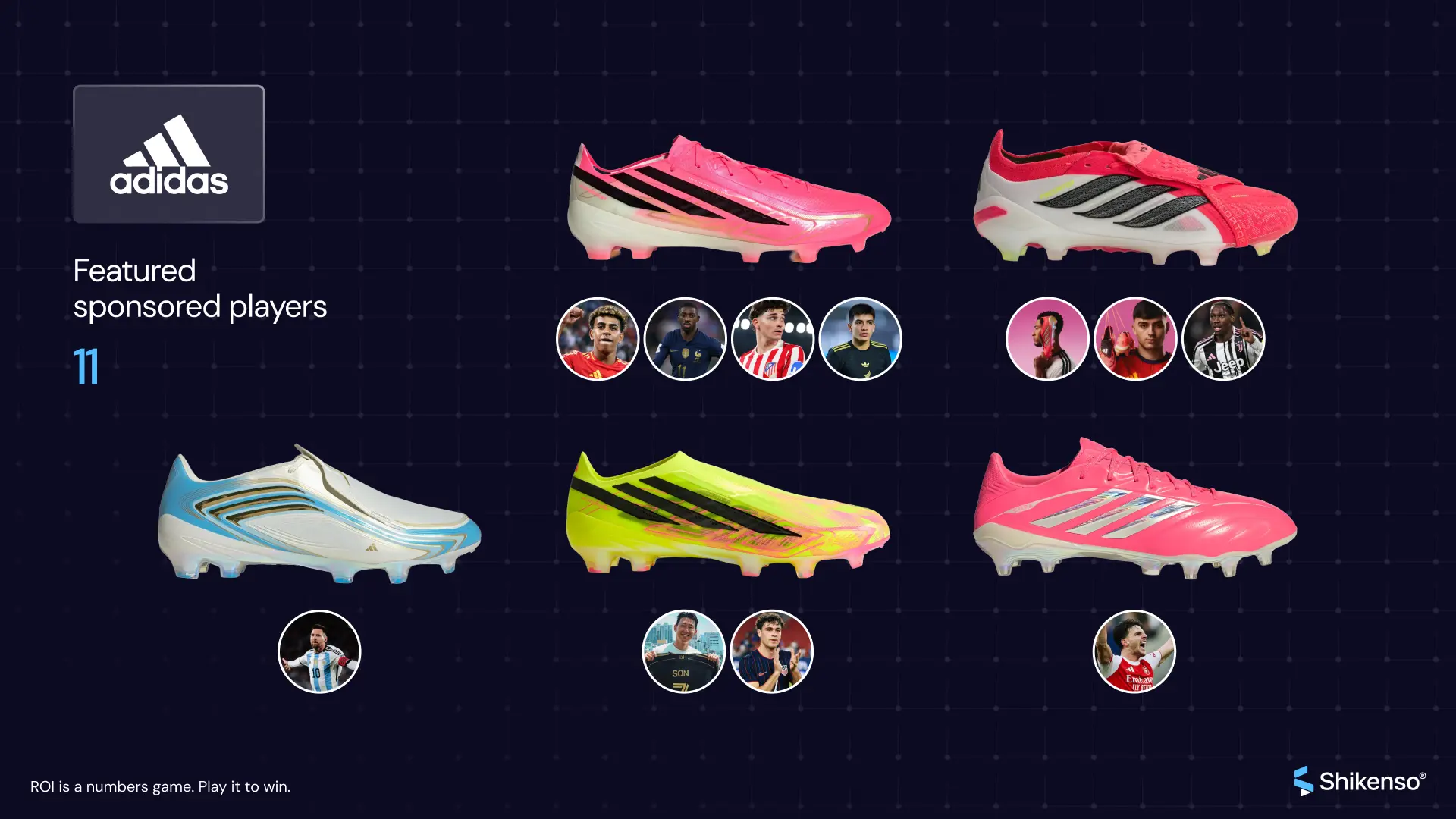
Lionel Messi wears the signature F50 "El Último Tango," a bespoke design in white with blue and gold Argentine accents. At 37 and appearing in his sixth World Cup, it is positioned as his final chapter in Adidas boots.
On the other hand, Lamine Yamal, 18 years old and already one of the most-watched players at the tournament, wears the F50 "Heartbreaker." Adidas has explicitly framed the pairing as a generational handover — same silo, same brand, two different eras. Ousmane Dembélé extends the F50 roster into France's attack.
Jude Bellingham, Pedri, and the Predator
Jude Bellingham wears the Predator, the most recognisable boot in the Adidas range. His commercial relationship with the brand runs across multiple layers: Real Madrid (Adidas kit), Adidas boots, and a prominent role in the Road to Glory campaign.
England's kit is Nike, so Bellingham will wear Nike kit and Adidas boots on the pitch — a routine result of the federation and player deal split, and one that reinforces Adidas's player-level visibility regardless. Pedri and Declan Rice complete the boot roster across Spain's midfield and England's engine room.
Adidas's Road to Glory pack mirrors Nike's Breakout in palette, both brands opting for red and gold tones across their tournament collections. The Road to Glory carries the FIFA tournament emblem on the insole, the most visible marker of Adidas's official status, placed on the one piece of equipment no other brand at the tournament can replicate.
The Challengers Brand
Puma
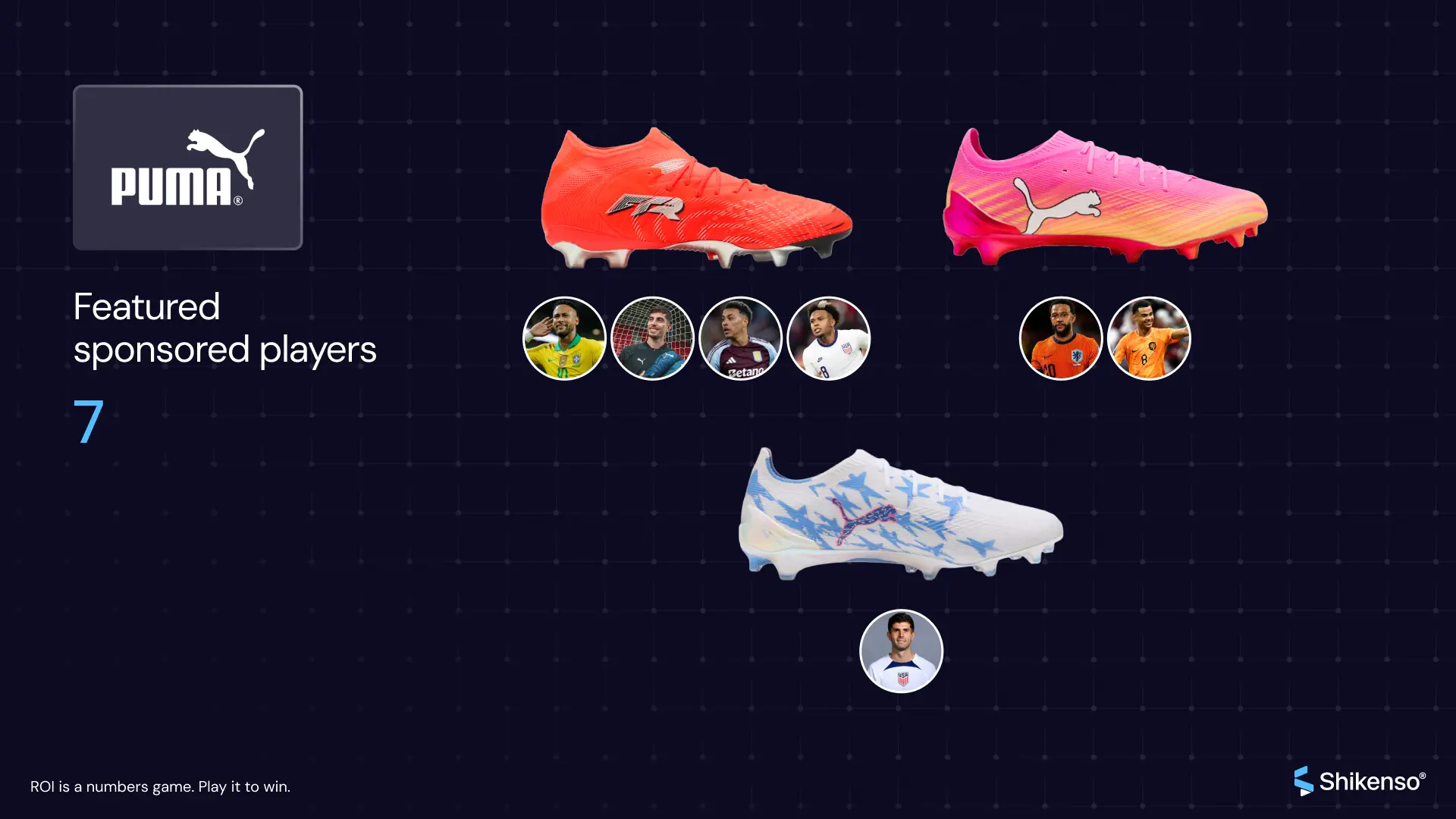
Puma enters 2026 having tripled its marketing investment compared to 2024. Neymar Jr anchors the boot roster in the Future 9 from the Showtime pack, returning to a World Cup after injury. Kai Havertz, Christian Pulisic, Cody Gakpo, and Morgan Rogers add coverage across Germany, the USA, the Netherlands, and England's squads.
The Showtime pack uses mismatched left and right boot colourways — pink with orange and aqua across the Future, Ultra, and King franchises. The asymmetric design is deliberately built to stand out in the close-range broadcast shots where boot logos are most visible.
New Balance
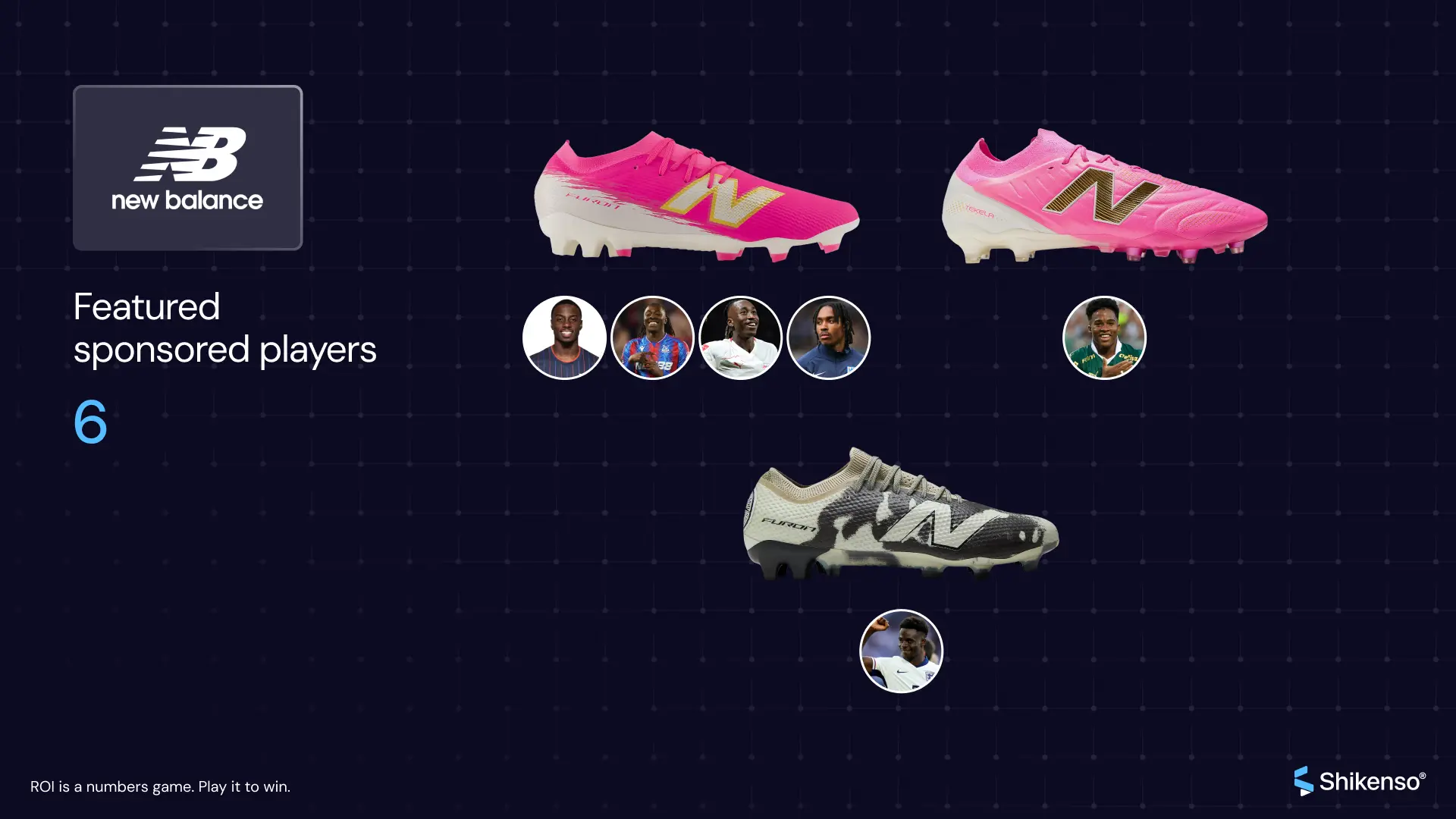
New Balance holds no kit contracts at 2026, so its boot exposure runs entirely through player deals, with Bukayo Saka as the headline name. Saka wears the Furon v8 "7egacy" edition, his second signature boot with the brand, built around an offset lace system and a large straight strike zone. Around 10 New Balance athletes are competing at the tournament.
Rather than ambush marketing, the brand is running activations in Boston, Los Angeles, Miami, and New York tied to its athletes' presence, treating the World Cup as a credibility platform rather than a volume play.
Skechers
Skechers is the newest name in the top tier of football boots, having launched its first dedicated line only a few years ago with Harry Kane fronting it. England's captain and record goalscorer leads the roster in the SKX 2, with Anthony Elanga and Barış Alper Yılmaz wearing the Razor 2 for Sweden and Türkiye.
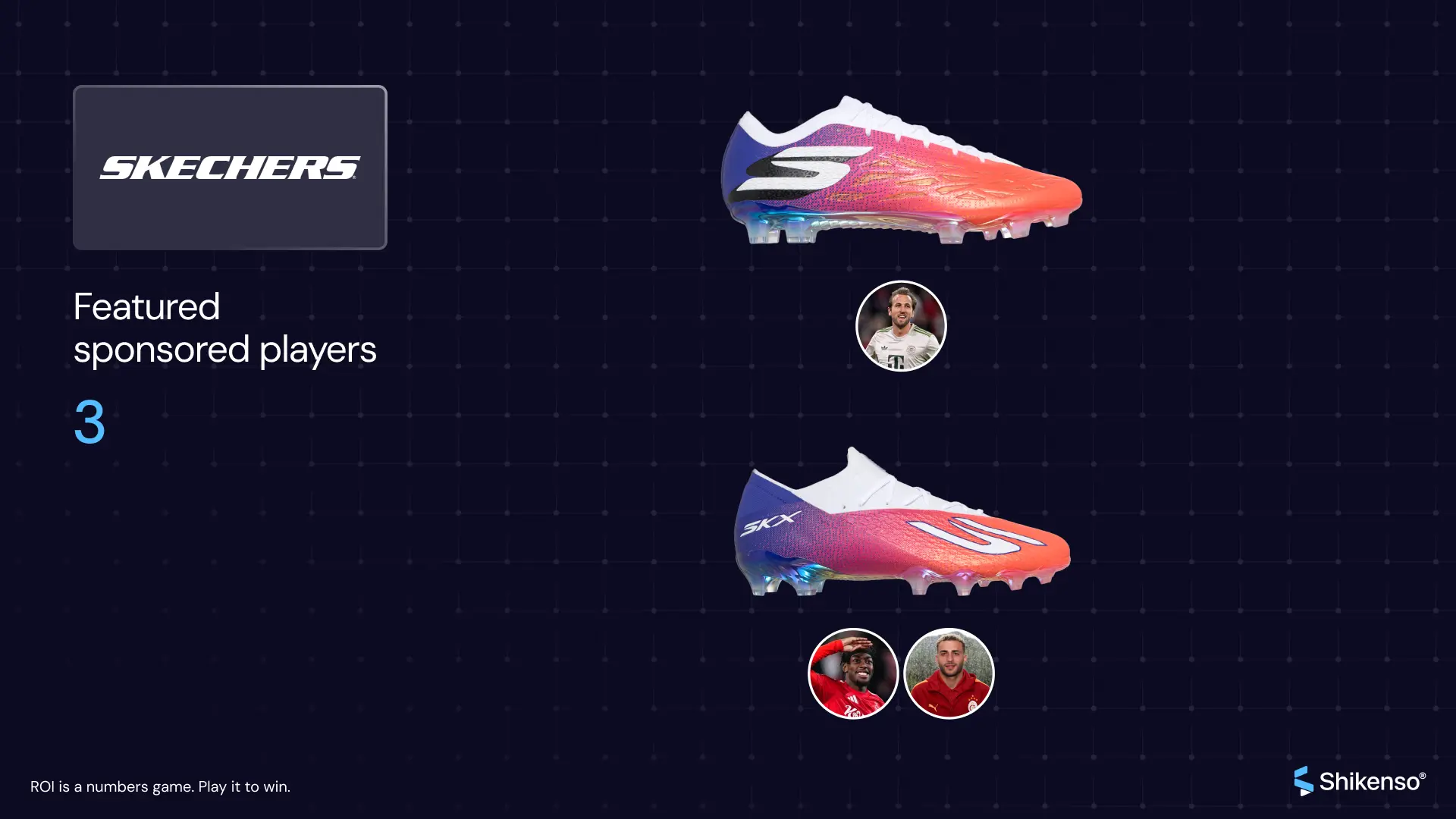
For a brand long associated with lifestyle footwear, signing a striker of Kane's profile was the entry ticket to a market controlled for decades by Nike, Adidas, and Puma. A World Cup is where that bet gets tested in front of the largest audience in the sport.
Mizuno
Mizuno carries more football history than its current profile suggests, having put boots on World Cup winners as far back as Rivaldo in 2002. Its return to the top level runs through João Félix, signed as global ambassador and handed the brand's first signature boot, the Alpha III. Maxence Lacroix wears the same speed silo for France, while Japan's Maya Yoshida laces up the heritage Morelia on the sideline as part of the Japan's team, having played his final match for Japan in May 31st.
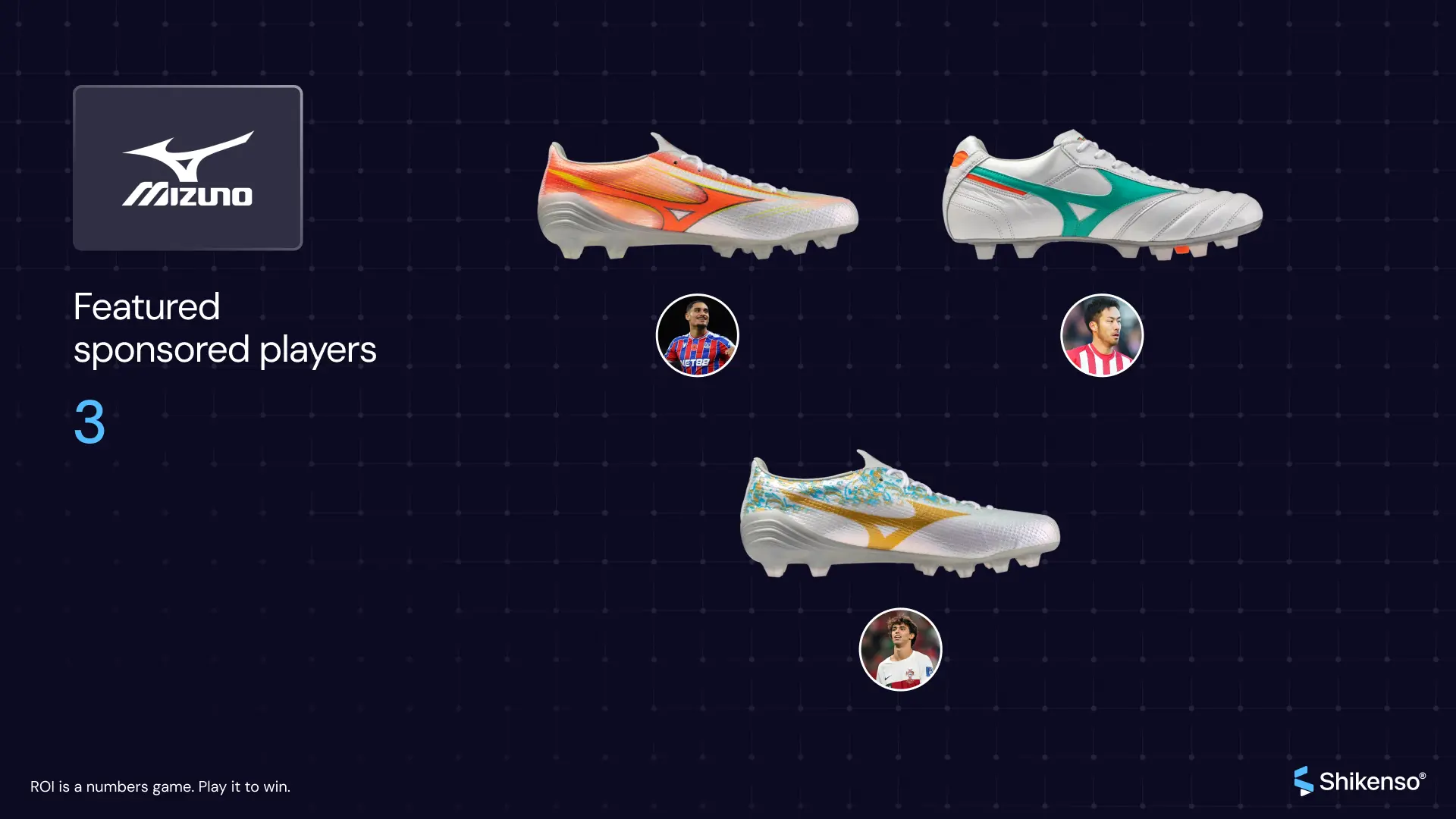
The Alpha is Mizuno's speed boot, built to compete with the Mercurial, F50, and Ultra rather than sit in the leather niche the brand was known for. Félix gives it a name big enough to be noticed, and the tournament is the platform to put Mizuno back in the wider boot conversation.
What Boot Exposure Means for Brands
A World Cup is 104 matches of broadcast production built around close-range camera work. Boot logos accumulate across goal celebrations, replays, and highlight cycles that run long after the final whistle.
The scale compounds quickly. A brand whose athletes advance deep into the tournament earns:
- Extended highlight cycles across every broadcaster covering the result
- Social video clips carrying the player's image for weeks after the match
- News photography circulating independently of any media buy
- Punditry segments replaying the same goal footage across multiple days
Kit brands track this through broadcast minute analysis tied to federation contracts. Boot brands face a more fragmented picture: exposure is tied to individual athletes, and without independent measurement, the gap between what a deal cost and what it delivered stays wide.
How Shikenso Tracks Boot Exposure
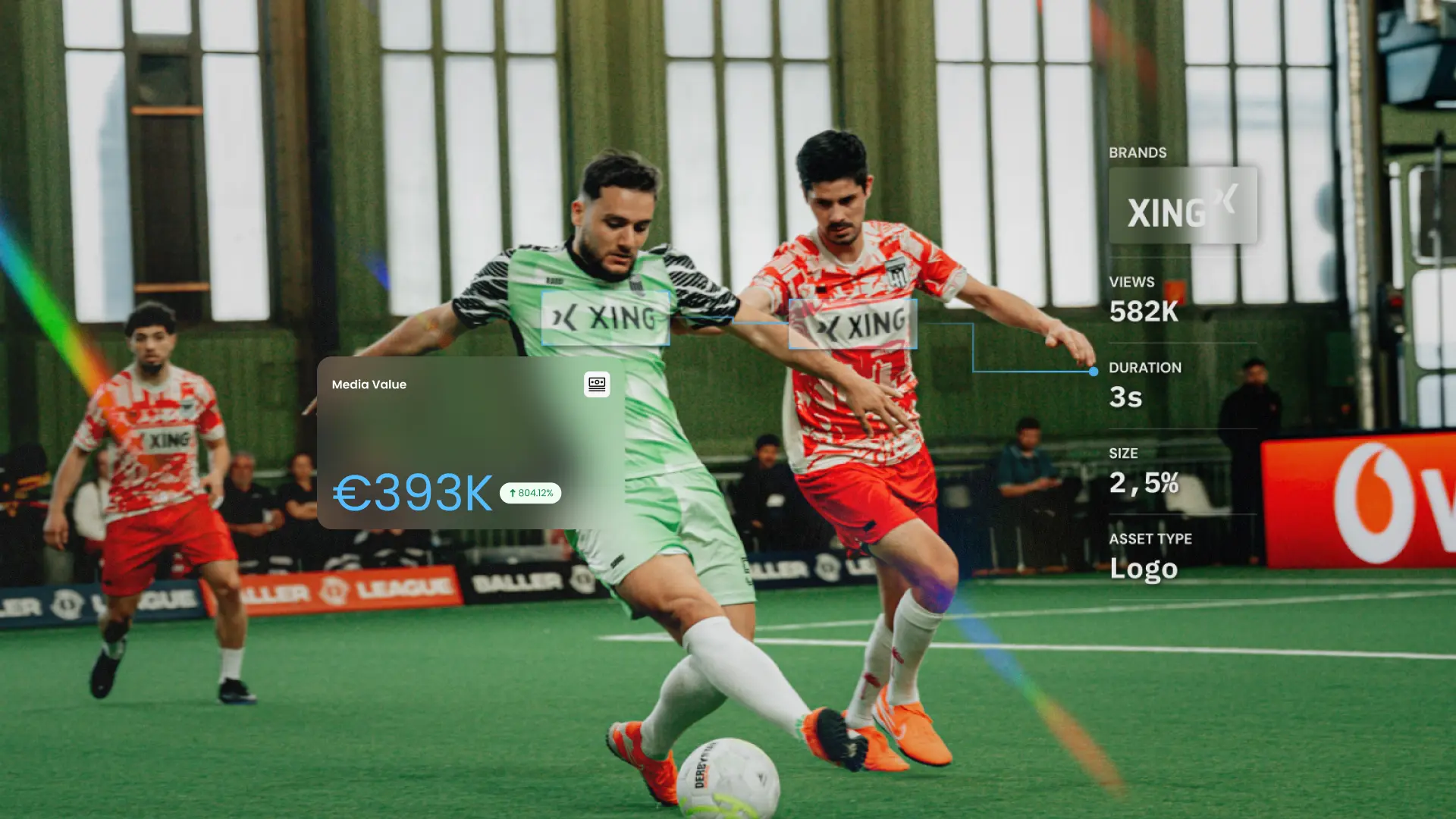
Our computer vision AI detects logo appearances frame by frame across broadcast, OTT, streaming, and social media. Every appearance is logged, valued, and surfaced in one sponsorship analytics dashboard, giving you independent verification of what your deals actually delivered.
You can benchmark a player-level boot deal against a federation kit contract, compare performance across your full portfolio, and go into the next negotiation with verified data on your side.
The Brands That Win Both Battles
The deals producing exposure at this tournament were planned years in advance. The brands that build on that advantage are the ones converting this summer's data into leverage for the next negotiation. That is where a strong player roster becomes a durable commercial position.

Related reads

Get new insights straight to your inbox
Don’t miss out on the insights that the press and media rave about!