
Gaming pulled in €180 billion globally in 2025. Snack brands found direct access to Gen Z where they actually spend their time—something traditional advertising channels couldn't deliver. Over half of Gen Z identifies as gamers. Logo placements weren't enough. Brands needed to integrate into gaming culture itself.
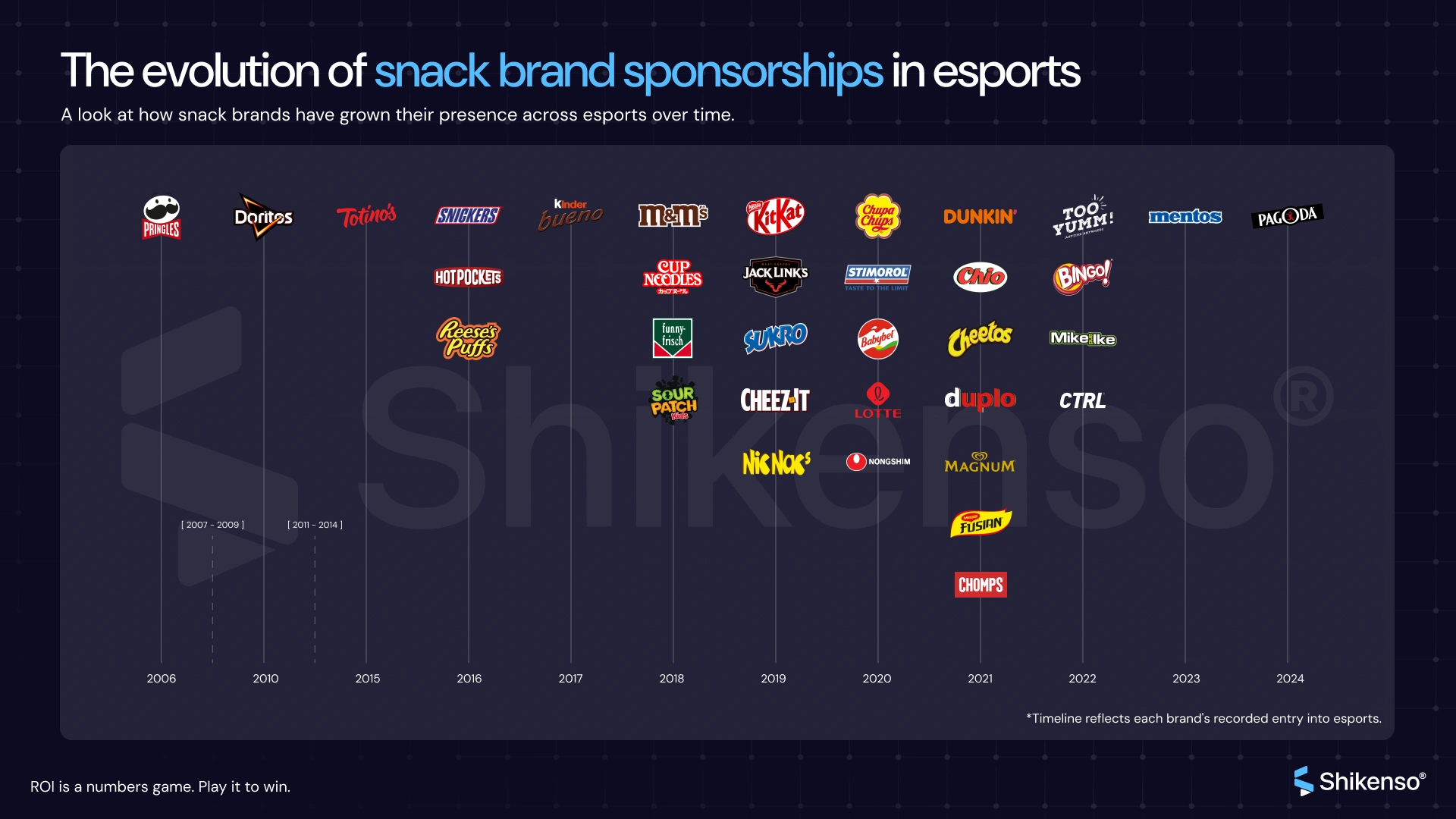
Between 2006 and 2026, snack and sweets companies evolved from testing esports to embedding themselves in it. Pringles installed virtual vending machines inside PUBG. Doritos let Chinese fans scan QR codes on packs to challenge pro players live. KitKat turned technical pauses into branded moments across multiple esports titles. The brands that stayed became part of how gamers fuel sessions, celebrate wins, and connect with teams.
This timeline tracks which brands entered, what they activated, and who kept coming back.
Brands That Keep Coming Back
Some brands tested esports once. Others built multi-year strategies across teams, tournaments, and regions.
Pattern Analysis:
- Pringles shows the longest sustained commitment (2017-present)
- KitKat demonstrates strategic expansion across Riot Games titles
- Doritos focuses on entertainment-side activations rather than team sponsorships
Complete Snack Brand Timeline (2006-2026)
Major Partnership Spotlights
Pringles x ESL One Hamburg (2017)
After 11 years away from esports (2006 MBC Game Starleague), Pringles returned with ESL One Hamburg. The partnership signalled Pringles' commitment to becoming a permanent fixture in esports.
What followed: ESL, LEC, G2 Esports, Twitch Rivals Europe, NSE. Pringles became one of the most visible snack brands in competitive gaming.
KitKat x LA Valiant (2019)
KitKat entered esports through Overwatch League with LA Valiant in 2019.
One year later, KitKat secured the main LEC partnership (2020), introducing the "Have a Break" branded tech pause. By 2024, the deal extended through 2026. In January 2026, KitKat added VCT EMEA and Game Changers EMEA as official partner—multi-title strategy confirmed.
PAGODA Snacks x LCS (2024-2026)
Asian-American snack brand PAGODA Snacks became LCS' "Official Egg Roll" in 2024 with a multi-year deal running through 2026.
The activation: "Let Him Cook" segment spotlights plays of the day. "Put the Egg Rolls In" tech pause appears during game pauses. Product drops and giveaways throughout. PAGODA shows how regional brands compete alongside global giants by targeting specific esports communities.
Why Snack Brands Sponsor Esports
The Demographic Advantage
Esports viewership skews heavily toward 16-35 year olds, with the average fan aged 26. Compare that to traditional sports, where the average fan is 50. That 24-year gap represents the next generation of consumers, and over half of Gen Z already identifies as gamers. For snack brands, this demographic concentration offers access to young consumers at scale.
Natural Consumption Alignment
Gaming sessions create snacking occasions. Late-night streams coincide with peak snack consumption windows. Multi-hour tournaments mean sustained brand exposure during periods when gamers are actively engaged. The consumption pattern fits the product category naturally—gamers snack while they play, watch, and compete.
Evolution Beyond Logos
In-game integrations replaced simple sponsorships. Pringles installed virtual vending machines inside PUBG. Doritos let Chinese fans scan QR codes on packs to challenge pro players live. KitKat branded technical pauses as "Have a Break" moments, while PAGODA turned game pauses into "Put the Egg Rolls In" segments. Creator partnerships emerged as brands shifted from team sponsorships to influencer collaborations for more authentic audience engagement.
Market Consolidation
Mars acquired Kellanova in December 2025, creating a snack powerhouse: Pringles, Cheez-It, Pop-Tarts alongside M&M'S, Snickers, Skittles. Multiple brands under one corporate umbrella could mean coordinated esports strategies across the portfolio.
Regional Patterns & Market Trends
Global Players Set the Pace
PepsiCo dominates with 85% of gamers choosing Doritos as their snack of choice. The company's Frito-Lay division—spanning Lay's, Doritos, Cheetos, and Ruffles—accounts for over 25% of PepsiCo's total revenue. Mars Snacking, following the Kellanova acquisition, now controls both Pringles and a comprehensive confectionery portfolio. Nestlé maintains focus on KitKat's multi-title, multi-year European strategy.
Regional Brands Find Their Lane
PAGODA Snacks entered North America with community-focused activations targeting Asian-American audiences through the LCS. Nongshim took a different approach in South Korea, launching an esports team (Nongshim RedForce) rather than traditional sponsorships. Regional QSR chains continue exploring local tournament partnerships as testing grounds.
Strategic Approaches Diverge
Global brands operate across multiple regions and titles simultaneously—KitKat and Pringles maintain partnerships spanning continents and game genres. Regional brands concentrate on specific communities and demographics, building depth rather than breadth. Endemic brands like G FUEL (in the beverage category) demonstrate how products built specifically for gamers create their own sponsorship models.
Looking Ahead
Twenty years after Pringles' first South Korean partnership, the category evolved from experimental budgets to core marketing strategy. The brands winning in 2026 integrated into how gamers consume content, not how they watch advertising.
Metaverse activations, creator partnerships, and mobile esports remain growth opportunities, but the fundamental principle stays constant—show up where gamers already are, or lose access to the next generation entirely.

Related reads

Get new insights straight to your inbox
Don’t miss out on the insights that the press and media rave about!